Jamelle Bouie's Reddit AMA: Insights from a Journalist and Cargo eBike Rider
Photo: "Autumn morning" by Bob Mical / CC BY-NC 2.0
Visitors to the Reddit subforum r/terngsd recently had the opportunity to pick the brain of journalist and cargo e-bike rider Jamelle Bouie during an Ask Me Anything (AMA) event.
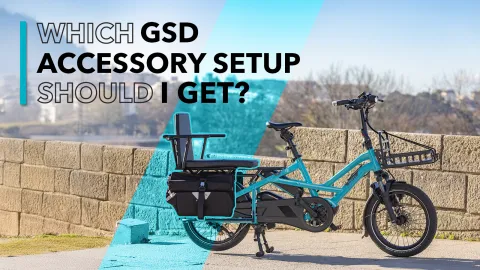
Jamelle describes himself as “a columnist for the New York Times opinion section, a political analyst for CBS News, and the proud owner of a Tern GSD S10.”
The moderator of r/terngsd says Jamelle was the first guest in a planned series of AMA events featuring “super smart and interesting people discuss[ing] the world of cargo e-bikes and how they change the way we live in the world.”
The AMA on September 8, 2021, garnered lots of interesting questions from Reddit users on topics ranging from Jamelle’s personal experiences with his e-bike to big-picture issues like infrastructure and land-use policy. A theme that came up repeatedly was building: building more infrastructure, more housing, and more momentum for biking across the United States.
Below, we’ve collected some of the highlights from Jamelle’s AMA. If you want to be kept in the loop about future r/terngsd events, head on over to the subreddit and subscribe.
On Jamelle’s riding habits, riding in Charlottesville, and land-use politics
Question from Reddit user u/Mobilenoble_0
Thank you for taking the time to share your experience and thoughts.
- What is your average trip distance and how frequently do you find yourself riding to meet your needs (errands/recreational destinations etc)?
- What's the land use mix in your neighborhood? Do you find that you can access most of your needs locally or do you find yourself taking longer trips than you would prefer?
- Are there any trips you are not currently taking on the GSD due to the distance and/or concerns with unsafe streets?
- Related to both land use and transportation planning, what's something in the works in your community that you are excited about? Conversely, what's something that you view as problematic/concerning, due to government and/or community action or inaction?
Answer
Hi! Thank you for your question. Here are some answers.
- Most of my trips are between 1 and 3 miles. I’m usually going to a nearby grocery store to grab a few items, or to the university library, or to a coffee shop.
- My neighborhood is entirely residential, but Charlottesville is small enough that on my bike I can get to the downtown business district pretty quickly. Sometimes I will ride 30 minutes or so to Target, but that’s more because I enjoy the ride than anything else.
- My kids’ daycare is less than 3 miles away, but the speed limit on the road is 45 MPH and there is no bike lane. Too dangerous.
- We are currently working on (fighting over) a future land use map that, if we can overcome NIMBY opposition, will be the first step toward building far more housing than exists in this city. It’s simultaneously very exciting and also very despair-inducing (given the opposition of very influential NIMBYs.
On bike-friendliness (or lack thereof) and infrastructure
Question from Reddit user (and Tern Team member) u/arleighg
Jamelle - How "bike-friendly" is Charlottesville? I picture it as a college town.
Answer
Compared to most places, Charlottesville is pretty bike-friendly. Compared to actually bike-friendly places, it is pretty bad. Protected bike lanes are non-existent, most of the city is very clearly designed for cars, and drivers themselves are incredibly hostile toward cyclists. And yet! Lots of people still bike, which to me suggests that better infrastructure would induce even more people to ride rather than drive.
“If you build it, they will come”
Question from Reddit user u/the5nowman
[...]
Obviously GSDs (and other ebikes) have a higher barrier to entry than regular bikes, but way less than cars. What do you think it'd take for utility cycling to take off in cities/neighborhoods where the sight of more bikes is seen as gentrification? Here in DC, and I know others, plenty of kids do ride bikes all around town, but they're not mentioned when planning safer infrastructure, and it seems at times, flat out forgotten about.
[...]
Answer
[...]
I'm a strong believer in "if you build it, they will come" when it comes to urban infrastructure. A city that invested in cycling and pedestrian infrastructure would see, I think, an increase in the number of people who utilized it. A thing to remember, here, is that the majority of people who commute by bikes are not the affluent professionals we associate with bike lanes; it's working people who cannot afford cars. Now, as far as purchasing bikes is concerned, I think this is a question of reducing the sticker shock through subsidies, payment plans and the like. I think that if you can show people the utility of, err, a utility bike, and if there is infrastructure to bike safely, you can get a lot of people to start replacing car trips with them.
[...]
Housing is “key to any of this working”
Question from Reddit user u/JFKtoSeatac
What policies can states and localities (or even the Feds) implement to encourage electric bike use over private cars? Are there policies that are actually being implemented now? Could some of the incentives currently in place for electric cars work for e-bikes?
Answer
On the state and federal level, I think the answer is subsidies and tax rebates for purchasing e-bikes, as well as funding for building more and better bike and pedestrian infrastructure. On the local level, in addition to the above, I think cities that are able should experiment with giving allowances and subsidies to employees who bike instead of drive. One idea I've had, for example, is for UVA — which has a chronic parking shortage — to allow employees to cash out their parking benefits for a subsidy that would go towards the purchase of a bike or e-bike.
Key to any of this working, however, is housing! If employees cannot afford to live near their jobs on account of high housing costs, then cars will always be necessary.
On countering NIMBY-ism
Question from Reddit user u/AgainstTheSprawl
I appreciate all your advocacy on land use and zoning reform. As you've noticed, the people who tend to be most involved in local politics are older, whiter, and wealthier than the overall population. In many cases, local governments even put their thumb on scales in favor of these populations by holding off-year elections, creating dozens of advisory boards that empower people with extra time on their hands, and using a public comment process that makes it too easy to stop projects.
What can we do to fix this process? Solutions that would be more democratic in practice, like limiting the voices of NIMBYs, sound anti-democratic in theory.
Answer
This is a great question. Part of countering NIMBYs will just have to be getting even more involved and doing everything you can to use the process against them. Advisory boards are important here. Merely keeping them from signing off on bad policies can be a big victory. Beyond that, an important reform is moving local elections to November along with state and federal elections. Increasing the visibility and turnout of elections can help limit NIMBYs as well.
Hope for a “virtuous spiral”
Question from Reddit user u/amberrr_krrreeegerrr
It's easy to get caught up in the negatives when talking about equity in city planning, and transportation - there is a lot more that needs to be done. So what are a few of the positive changes you have seen in regards to how bikes/ebikes have created a more equitable way for folks to move around urban environments?
Answer
To refer back to an earlier comment, I think that e-bikes in particular — because they are so convenient and so fun — have shown a lot of people that it is possible to get around and live one’s life without relying on a car. Even without direct support from state/local/federal authorities, I think that in places where it is feasible to do so, more people are considering a bike as their vehicle, and not just as a recreational device. My hope is that this is what helps create demand for the better infrastructure that would get more people on bikes, creating a kind of virtue spiral for biking.
We'll end our recap here. If you'd like to read the complete AMA, you can view it here.
Thanks so much to Jamelle for taking the time to share his perspective on cargo e-bikes and for being part of the virtuous spiral. The more people speak up about the benefits of bikes, the more opportunity we have to influence decision-making and get more people riding. 💪