To read this article in German, click here.
The Tern HSD is a versatile, compact e-cargo bike that has all the conveniences of a larger-sized cargo bike—and none of the bulkiness that’s usually associated with one. Our HSD fleet comprises Gen 1 and Gen 2 models, and although they share the same platform, each generation comes with its own features that different riders may find more suited for their riding needs.
Interested in getting an HSD, and doing some research on the two generations before going to your nearest Tern dealer for a test ride? In this article, we’ll take a good look at the similarities and differences between the HSD Gen 1 and Gen 2, and hopefully by the end, you’ll have a better idea of which generation is right for you.
Main similarities
1. Compact for city life
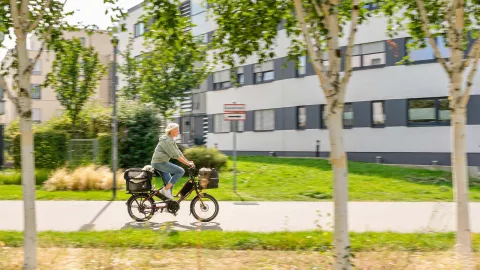
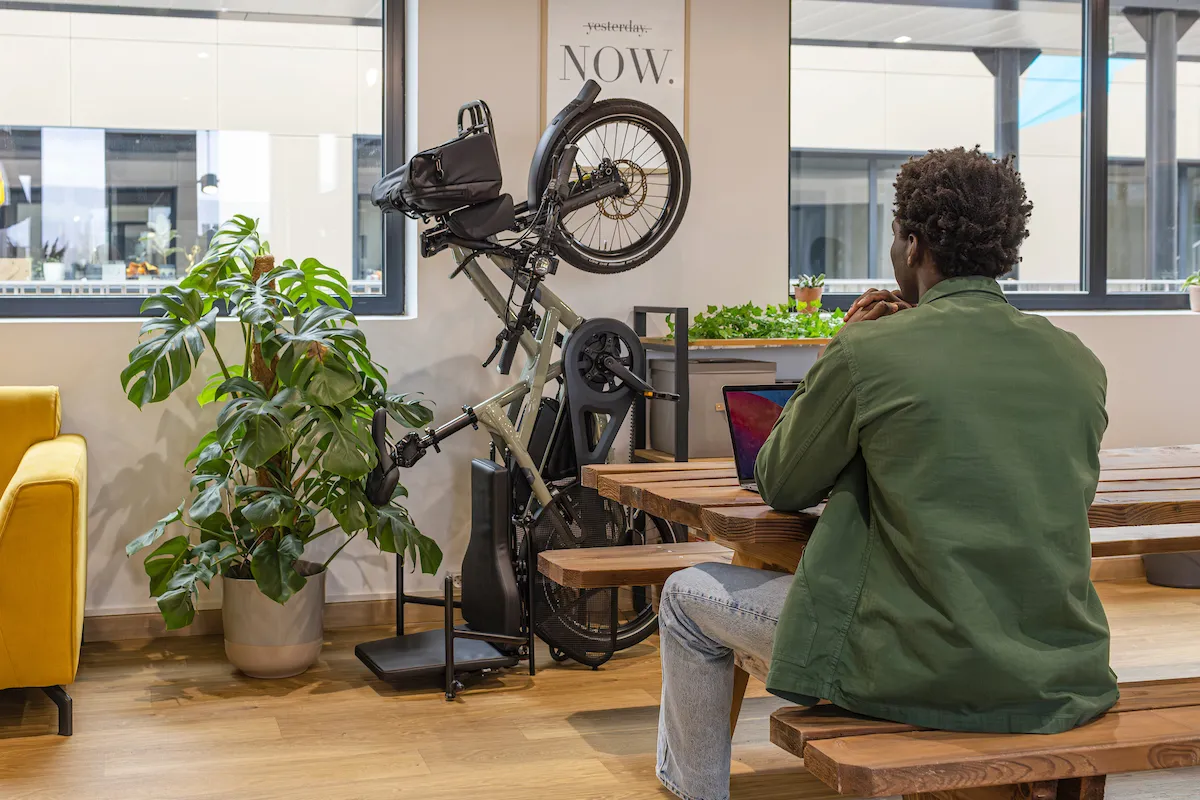
We created our HSD e-cargo bikes especially for city riders who fancy the idea of getting things done via an easily manageable bike. Shorter than a regular bicycle yet surprisingly powerful when it comes to hauling capacity, the nimble HSD is easy to maneuver in tight urban spaces and more than capable of handling your daily errands. You can even bring it indoors easily—it’s lean and compact enough to pass through narrow hallways, and flips up for elevator rides. It also parks vertically, essentially allowing you to use a wee bit of floor space to eliminate bike-theft anxiety for good. Fold the handlepost down, and the HSD turns into a flat package ready for transport or storage.
2. Tailored to suit your needs
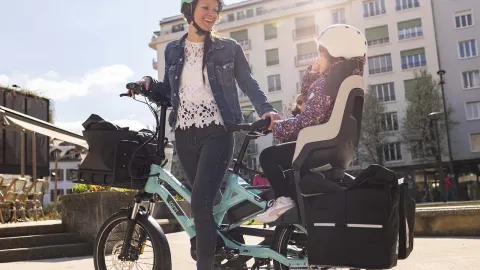
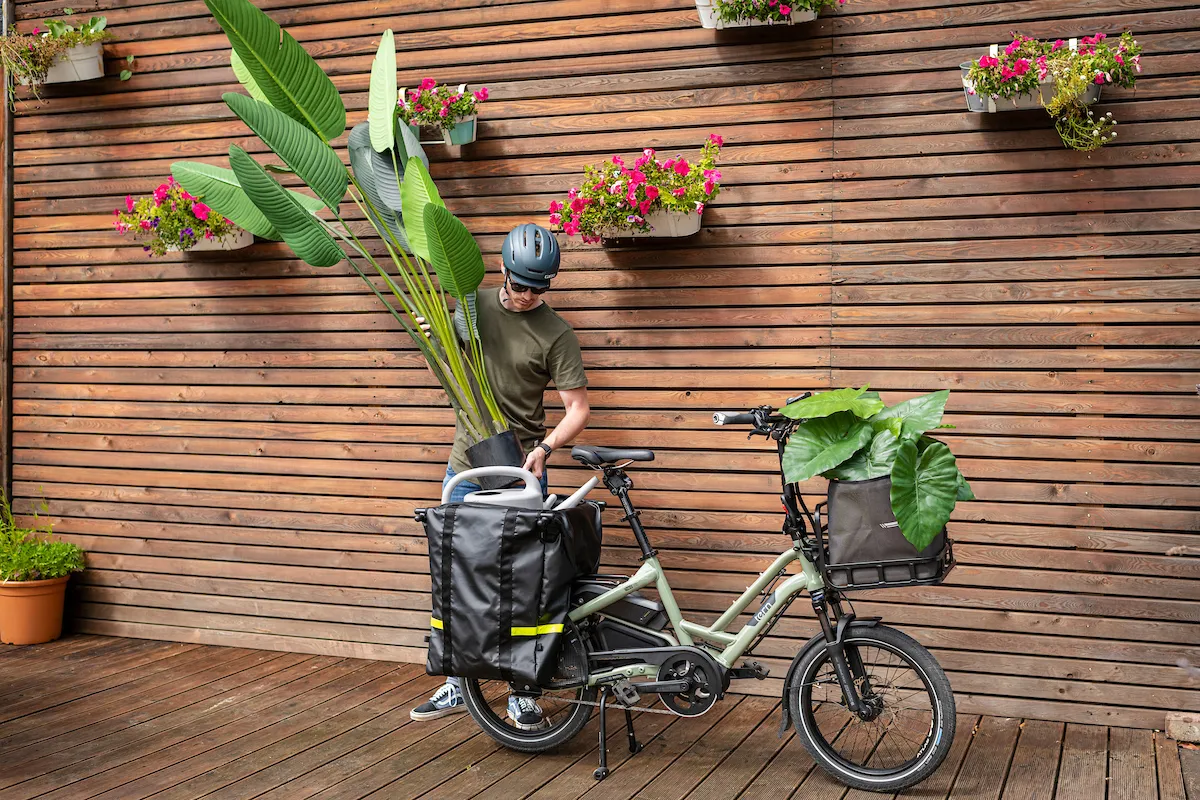
With a hefty maximum gross vehicle weight that’s only second to our GSD’s 200 kg (440 lb), the robust HSD is ready for your daily hauling needs. Both generations of the HSD are compatible with Tern’s vast ecosystem of accessories, making it easy for you to load up on groceries and shopping finds, carry the dog, or chauffeur a kid around. Plus, the low center of gravity and long wheelbase ensure your ride remains stable even under load.
3. Safe as can be
Tern builds bikes with customer safety as our top priority. To make sure the HSD can safely carry the stated load limit ride after ride, we sent crucial weight-bearing parts like the frame and fork to EFBE Prüftechnik GmbH, one of Europe’s leading bicycle testing labs, for rigorous testing. These parts undergo EFBE’s punishing Tri-Test, wherein the same frame and fork must survive round after round of extensive testing simulating all possible stresses throughout a bike’s lifespan before they can receive the final seal of approval.
And when it comes to electrical safety, these Bosch electric bikes don't kid around, either. The entire Bosch e-bike system used on our HSD models, including the motor, battery, and charger, is tested and certified to the UL-2849 gold standard. This means each component is tested against potential electrical system hazards, as well as tested together for overall system safety.
Learn more about how we spec and build safe electric bikes to maximize rider enjoyment and minimize worries.
4. Built to last
A vehicle that is meant to replace car trips should last just as long as a car (if not longer), even with frequent use. In line with our philosophy of building reliable bikes that last, the HSD is designed with high-quality components that are serviceable to keep it on the road for many years to come. And we work with reputable suppliers like Bosch, who, in addition to sharing our belief of customer safety as priority, has developed a comprehensive service network to support both customers and dealers alike with the latest technology and spare parts.
5. Designed for sharing
A family bike should be able to accommodate riders of all sizes. Featuring an easily adjustable cockpit, all of our HSD models can resize in seconds to fit riders 150 - 195 cm tall (4’11” - 6’5”), so whether you’re sharing the bike with your +1 or the grandparents, everyone gets to enjoy a comfortable ride. Also, the low Easy-Step frame design allows smaller riders to effortlessly mount and dismount.
The above qualities shared across all HSD bikes are what make the HSD such an all-around practical bike and a joy to own. Now, let’s talk about the differences.
Main differences
1. Passenger capability
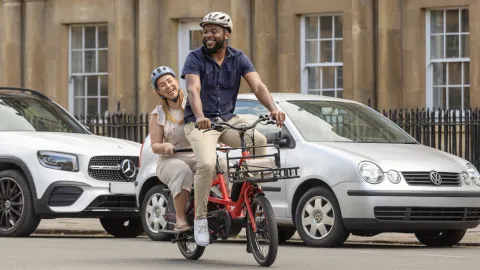
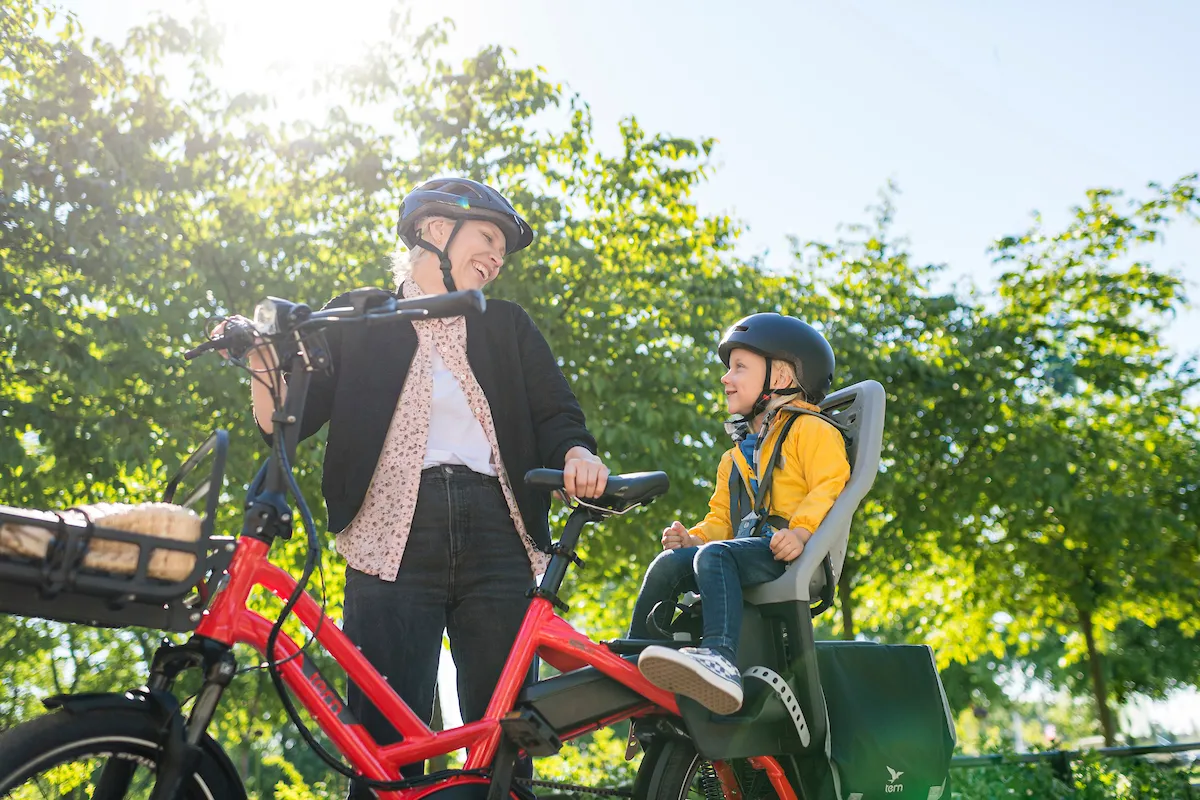
HSD Gen 1 and Gen 2 e-cargo bikes are both passenger-ready, but you may prefer one over the other depending on who your primary passenger is. On the HSD Gen 1, the rear rack is rated to 60 kg (132 lb). That means the bike is more than enough to comfortably carry a kid—from a tiny tot to a tween. It’s also great for carrying a small or mid-sized dog, or even a petite adult.
Meanwhile, the HSD Gen 2’s rear rack capacity is rated to 80 kg (176 lb), making it the more suitable option for carrying an adult passenger. But if you’re picturing you and your grown child riding off into the sunset on an e-bike, think again! For some kids, being carried around on a bike stops being “cool” when all their friends are zooming around on their own two-wheeler. You know your child best, so if your little shadow is the type who’ll eventually want to move onto bigger and better things, at least you’ll still be fine on your own with the HSD Gen 1.
Though, if there’s no child in the picture and commutes for two or date nights by bike sounds like something you plan on doing often, then the HSD Gen 2 is for you.
2. Smart e-bike vs e-bike
The HSD Gen 2 is a smart e-bike that’s connected to a wide range of services offered by Bosch through your smartphone, including electronic lock for the motor, over-the-air updates, and activity tracking. Like all smart tech, the HSD Gen 2’s smart system aims to enhance your overall user experience, and even provides insight into your trips for those looking to maximize their ride.
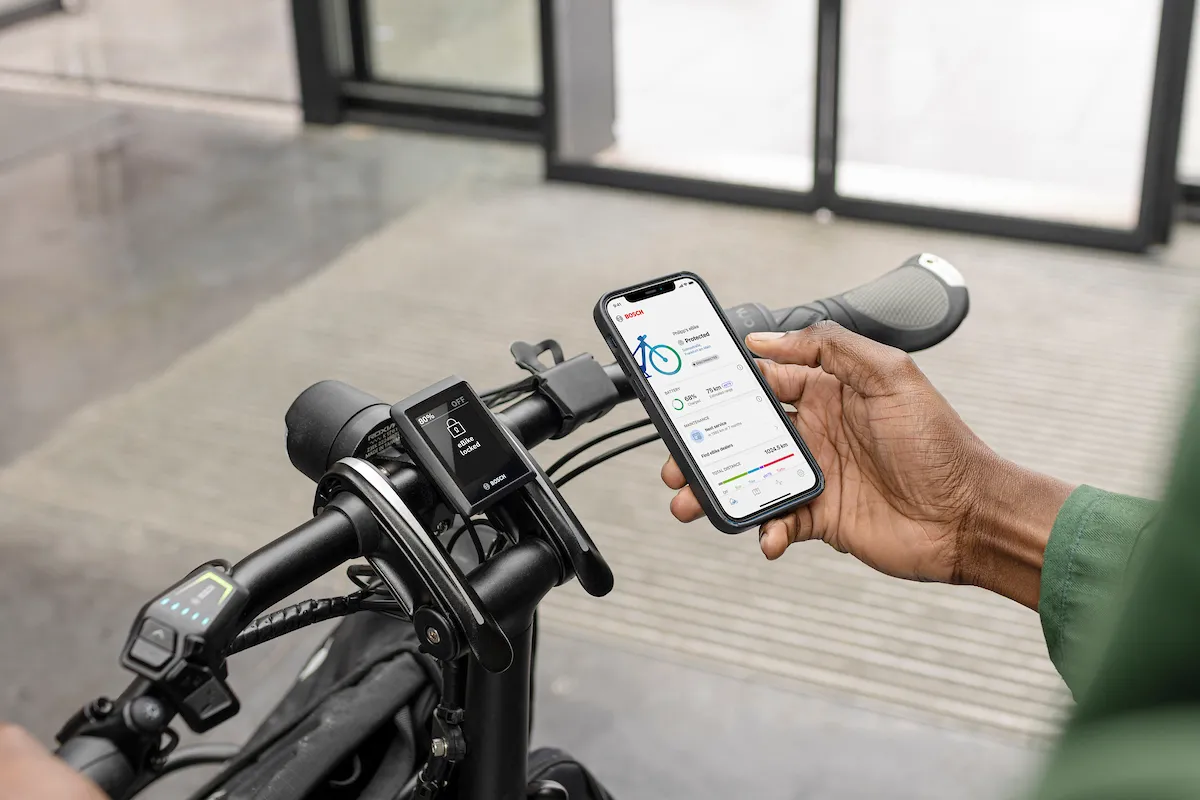
But for many others, knowing whether you’re turning at 60 rpm or 100 rpm is trivial, and connecting to the digital world is “so what?”—they just want a fun-riding e-bike that can flatten hills and help them carry stuff! For these riders, the HSD Gen 1 checks all the right boxes and comes at a lower price point than their smart siblings.
At the end of the day, it’s about what experience you want from your e-bike. An electric bike already delivers a next-level cycling experience compared to a traditional bicycle, so all that’s left for you to consider is whether you need the smart tech to go along with it.
3. Weight
When it comes to weight, HSD Gen 2 bikes are a tad heavier than their Gen 1 siblings. This is attributed to multiple factors, including differences in the sizes of motors and batteries used. A larger battery gives you more juice to travel farther, while a larger motor provides a bigger power boost. If lugging cargo up steep hills and on extended journeys is in the books for your e-cargo bike, you may want to consider the slightly heavier HSD Gen 2 with its amped up motor and battery. But for day-to-day errand runs and leisure rides, the HSD Gen 1 is plenty.
Aside from this, you’ll likely not feel the weight difference unless you are manually pedaling without motor support (great for leg days, by the way), or carrying the bike up a short flight of stairs.
4. Bosch battery compatibility
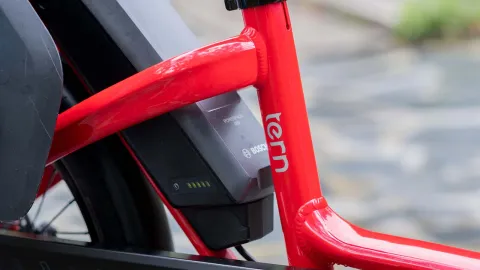
Bosch PowerPack batteries created for the same system (i.e., Bosch eBike System 2 for the HSD Gen 1 or Bosch Smart System for the HSD Gen 2) have the same format, and can be used interchangeably. Many riders find this feature to be extra convenient for sharing batteries with a family member who also has an e-bike. For example, if your spouse is a GSD rider and you are considering an HSD as the family’s second e-bike, you may want to get the HSD Gen 1 as both bikes use the same Bosch eBike System 2. This will allow you to share the batteries between the GSD and HSD.
And there you have it! The HSD is a compact e-cargo bike that has all the bells and whistles to make doing things by bike ridiculously enjoyable, with smart tech added as icing on the cake for those who prefer something a little extra. But whether your heart is set on the Gen 1 or Gen 2, we know you’ll end up with a bike that will help you create some amazing memories for many years to come.
Related Articles