Have you ever walked into a bike shop and noticed how customers, perhaps you included, are treated differently based on gender or appearances? Many reported experiencing the feeling of being looked down upon, or receiving “advice” they didn’t ask for. Yikes. We know that feeling. And it doesn’t matter whether they’re a beginner cyclist or someone who rides at a competitive level, as seen in this article which discusses the prevailing poor customer service experienced by individuals at bike shops.
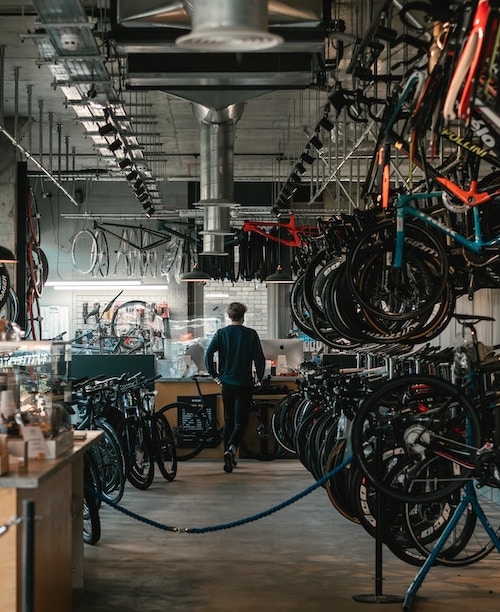
This “bike snobbery” is a symptom of a much larger issue: the bike industry has a diversity problem.
A bit of history
The diversity issue has clouded the bike industry practically since the invention of the very first velocipede—a wooden-wheeled, iron-framed contraption birthed in 1860s Paris that is the precursor to the modern bike. Despite the fact that velocipedes were heavy, rough to ride, and very expensive, they quickly became a fad among affluent young men across Europe.
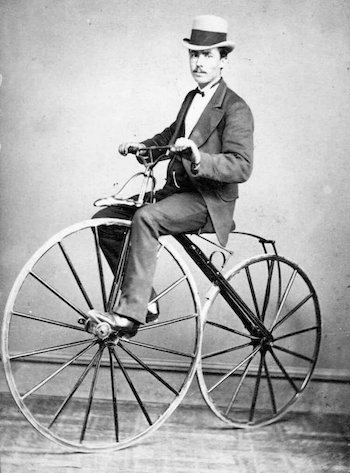
At that time, women worked in a limited range of occupations—housekeeping, washing, cooking, sewing, and tending to children. Seen as delicate and weak, they were deemed neither fit nor capable of working with tools other than those found in the kitchen or sewing rooms. As such, velocipede workshops were exclusively run by men, for men.
It was not until near the end of the century that society started to believe women were no less capable of mechanical pursuits than their male counterparts. Even so, the stigma surrounding women who challenged the “ideal of true womanhood” kept most women hushed about their budding mechanical interests. The few who defiantly made their skills known were quick to be dismissed as attention-seekers who could not possibly put money where her mouth is.
Back to modern day
Now, the humble bicycle has taken vast strides forward since the days of the velocipede. But the diversity issue surrounding the industry has been slow to come around. Men still account for the vast majority of the industry—all the way from manufacturers and brands, to dealers.
Consider these findings highlighted by the Bicycle Association’s recent report on diversity in the UK cycling industry:
- Men occupy the majority of roles in the cycling industry, while women account for only 8% of bike workshop roles and 19% of customer-facing roles
- Women hold 40% of the cycling industry’s administrative roles, but very few have progressed to senior leadership positions
A far cry from this day and age where women make up nearly half of the global workforce, wouldn’t you say?

And, as society in general wakes to the ever-present inequalities faced by marginalized groups, one thing becomes clear: the diversity issue in the bicycle industry is much more than just a men versus women thing.
Take those under the LGBTQ+ umbrella as an example. Many accomplished bike builders and mechanics who identify as queer or trans often struggle to receive the recognition they deserve—all because people tend not to look past the face value. The existing notion that one has to be a man (cis-gendered, able-bodied, somewhat slim-built, and preferably white, to be exact) to know the technical stuff—like how to fix a bike or understand any aspect of the bicycle industry—sends the message that anyone outside of the “preferred norm” is not permitted to thrive in this industry.
This, unfortunately, is the reality faced not just by the UK cycling industry, but the global cycling industry in general—which is a huge missed opportunity for businesses to boost productivity and performance, according to data collected from thousands of large companies across the world, quoted by the Bicycle Association’s report:
- The top 25% companies in male-dominated industries that have the most gender-diverse executive leadership teams are 47% more profitable than those in the bottom 25%
- Companies with ethnically-diverse teams are 36% more likely to have above-average profitability
- Inclusive business cultures lead to a 59% increase in creativity, innovation, and openness
Here’s where we stand
The bicycle industry needs to realize that diversity benefits everyone. As a brand that champions the bicycle as a sustainable mode of transportation for ALL, we want the industry to be a reflection of our global community of riders: diverse and welcoming. Here's where we stand when it comes to diversity:
At Tern, we believe a wider range of backgrounds and worldviews helps us improve absolutely everything we do, from the early stages of conceptualizing a product design to shipping out our bikes to dealers across the world.
Nearly half of us are women, and we are working to bring that closer to a 1:1 male to female ratio. Women at Tern hold key roles in product development, top management, and leadership. We are here creating, testing, and marketing products for other women like us.
We believe that elevating women to leadership roles and giving them a voice and platform is one of the best ways to truly increase diversity in the bike industry. And along the way, we hope to inspire the future generation of women leaders in sustainable mobility.
In addition to our Give Back Program in which we donate at least 1% of our net profits to social and environmental causes each year, we’ve created a Give Back Scholarship to encourage the growth of underrepresented groups outside of our own company. In the near future, we aim to bring more diverse voices to the industry by selecting, funding, and training bike mechanics through our partnership with bike shops that share our beliefs.

We also support initiatives that align with our beliefs:
- Raising awareness and bringing the LGBTQ+ community closer, with our friends at Asia Rainbow Ride.
- Reducing inequity in rural regions by helping people, particularly women and girls, overcome the challenge of distance and achieve independence, by supporting World Bicycle Relief's Mobilized Communities program.
- Pledging to create a more diverse, equitable, and inclusive workplace, with balanced representation at all levels, by supporting the Bicycle Association's Diversity in Cycling project.
But, it shouldn’t stop there.
The bicycle industry has a lot more distance to cover before it can be described as diverse, equitable, and inclusive, and we are committed to playing an active role in this endeavor. We know we can always do better!
Learn more about the Bicycle Association’s Diversity in Cycling project and how you can get involved.
1. Velocipede. (n.d.). In Britannica. Retrieved July 25, 2023, from Velocipede article.
2. Cruea, S. M. (2005). Changing Ideals of Womanhood During the Nineteenth-century
Woman Movement. Bowling Green State University.
Related Articles